
7 Best Ways to Wrap Wine Bottles for Shipping
Learn the best ways to wrap wine bottles for shipping using bubble wrap, padded sleeves and proper box cushioning. Avoid breakage and pack like a pro.
Book an airport transferLearn the best ways to wrap wine bottles for shipping using bubble wrap, padded sleeves and proper box cushioning. Avoid breakage and pack like a pro.
Book an airport transfer← All articles · Published 14 November 2026 · 7 min read
Last Updated: November 13, 2026
Quick Summary
To wrap wine bottles for shipping, give each bottle two to three layers of bubble wrap taped closed, with extra padding at the neck, shoulders and base. Fill every gap in a snug outer box with paper, foam or air pillows so nothing can move in transit.
The best ways to wrap wine bottles for shipping come down to one principle: each bottle gets its own protective layer, and nothing inside the carton can move. This guide covers wrapping methods that hold up in transit, whether you are sending a single bottle or a full case.
A common mistake is wrapping the bottle and dropping it into a loose box. The wrap protects the glass; the box stops the bottle hitting anything.
If you are wrapping a bottle to travel with you rather than to post it, our guide on how to pack wine for a flight home walks through the same method for luggage.
Here is the core wrapping method at a glance, step by step.
| Step | What to do |
|---|---|
| 1 | Wrap the bottle body with two full turns of bubble wrap, taped closed |
| 2 | Cushion the neck and shoulders, the weakest points |
| 3 | Protect the base with a foam disc or folded card |
| 4 | Seal the wrap with tape so it does not slide |
| 5 | Fill every gap in the box with paper, foam or air pillows |
Two layers of bubble wrap is the practical minimum for a wine bottle, and three layers is safer for long-distance freight. Anything less leaves the glass too exposed to impact.
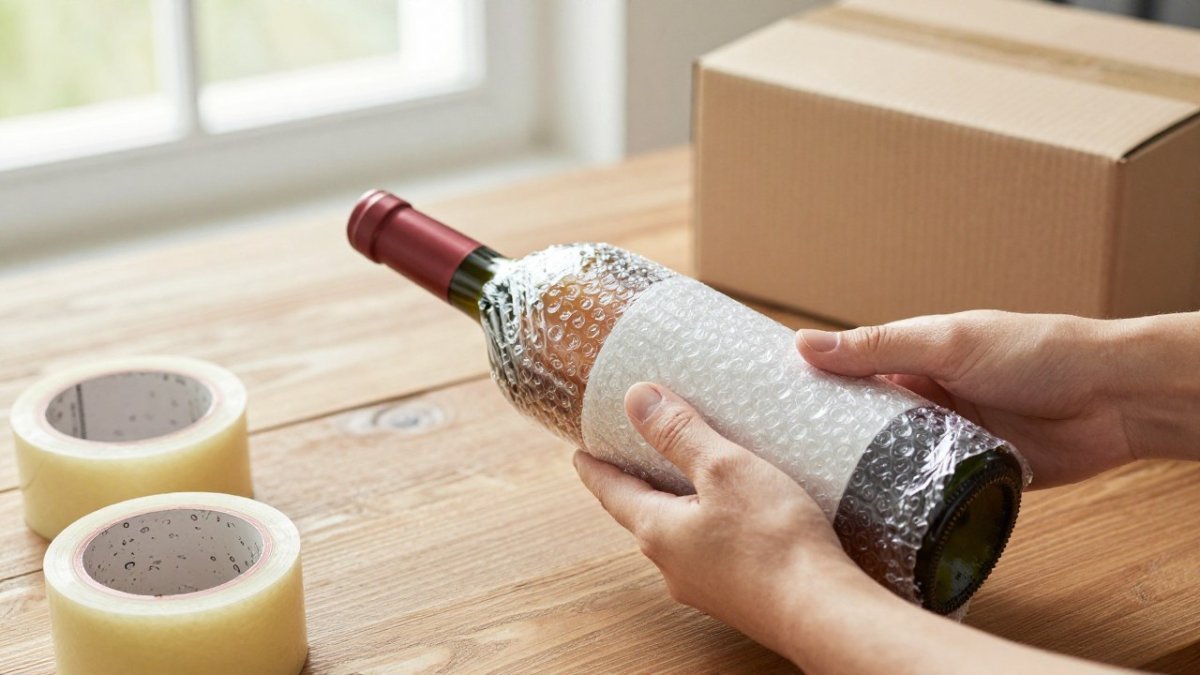
Plain bubble wrap alone is not a complete solution. A packaging guide from Trakya Pack's bottle packaging advice notes that single-layer bubble wrap is not preferred, and that paper dunnage can compress and let bottles shift. The fix is simple:
The right wine bottle shipping boxes hold each bottle in its own cell, with dividers that stop bottles touching. Movement causes more breakage than a single hard knock, so the box and its inserts matter as much as the wrap.
Start with the outer carton. The box should fit snugly, no more than a finger's width of slack, and carry fragile labels on at least two sides.
Sizing is where most home packers go wrong. Measure the wrapped bottle's diameter and height, then add at least 25 mm of cushioning on every side. A box that is too large is worse than one that is slightly tight, because empty space lets the bottle gather momentum before it hits the wall.
For deeper guidance on preventing glass breakage, read our article on how to pack glass bottles for shipping without breakage.
Breakage almost always traces back to one of three causes: too little cushioning, movement inside the carton, or a weak spot left unprotected. Address all three and glass arrives intact, but packing is only half the job. Carrier rules, temperature, and documentation decide whether a damaged bottle becomes a resolved claim or a write-off.
Carrier rules come first. Alcohol-shipping rules vary by carrier and by destination, and many services restrict or prohibit sending wine altogether. Before you wrap anything, check the carrier's current dangerous-goods and liquids guidance, for example, Australia Post's packaging guidelines set out rules on sending glass and liquids that vary by service. Confirm eligibility, packaging requirements, and labelling for the specific service you intend to use, and keep a record of what you checked.
Verify immobilisation before sealing.
Temperature and weather.
Document before you seal.
Wrapping wine properly takes ten minutes and saves a ruined shipment. If your travels involve carrying bottles rather than posting them, Sky Transfers can handle the journey to the airport with fixed-price, upfront pricing and no surge fees. Our chauffeurs offer meet and greet service and real-time flight tracking, so your timing stays predictable from door to departure. Get started with Sky Transfers and travel with your wine packed safely and your transfer booked in advance.
The safest method is individual wrapping with at least two layers of bubble wrap, paying extra attention to the base, neck and shoulders. Secure the wrap with tape so it cannot unravel, then place the bottle upright in a rigid shipping box with cushioning filling any empty space. Plain bubble wrap works only when doubled up; a single loose layer leaves the glass exposed to impact.
Yes, bubble wrap is the most common protective layer for wine bottles, but it works best as part of a full packing system. Use two layers minimum, add a padded sleeve or honeycomb cushioning for extra protection, and ensure the wrapped bottle cannot shift inside the carton. Check your chosen carrier's rules on shipping alcohol before you seal the box, as requirements vary.
Fill every gap with cushioning so the wrapped bottle cannot slide when the box is tilted. Paper dunnage can compress in transit and let bottles shift, so use honeycomb sleeves, foam inserts or a moulded wine bottle shipping box that holds each bottle in place. Shake the sealed box gently; if you hear movement, open it and add more packing material.