
How to Transport Wine Bottles Safely When Traveling
Pack and transport wine bottles safely with step-by-step wrapping methods, luggage rules for flights, and tips to prevent breakage and leaks en route.
Book an airport transferPack and transport wine bottles safely with step-by-step wrapping methods, luggage rules for flights, and tips to prevent breakage and leaks en route.
Book an airport transfer← All articles · Published 5 November 2026 · 9 min read
Last Updated: November 5, 2026
Quick Summary
To transport wine bottles safely when traveling, wrap each bottle in two layers of bubble wrap or thick clothing, seal it in a leak-proof bag, and stand it upright in checked luggage so any leak stays contained. Fill every gap with soft items so glass never touches glass, and keep bottles in the passenger area rather than the boot on road trips.
Yes, you can transport wine bottles in checked luggage on both domestic and international flights, provided you pack them properly and stay within airline weight limits. Travellers arriving with wine can protect their bottles with careful packing.
The catch is that checked bags face real pressure. Cargo holds are pressurised, but bags get thrown, stacked and squeezed. A bottle wrapped in a t-shirt will not survive that trip.
Weight matters too. A standard bottle of wine weighs about 1.2 kg to 1.5 kg. Checked baggage limits typically sit around 22.68 kg per bag, according to Hope Family Wines' packing guide, so four or five bottles plus your clothes can push you close to the cap fast.
So yes, checked luggage works. The rest of this guide shows you how to transport wine bottles safely when traveling without losing a single one.
The core method is simple: wrap each bottle, cushion it on all sides, and place it where it cannot move. Breakage prevention comes down to three things: padding, orientation and a leak-proof barrier.
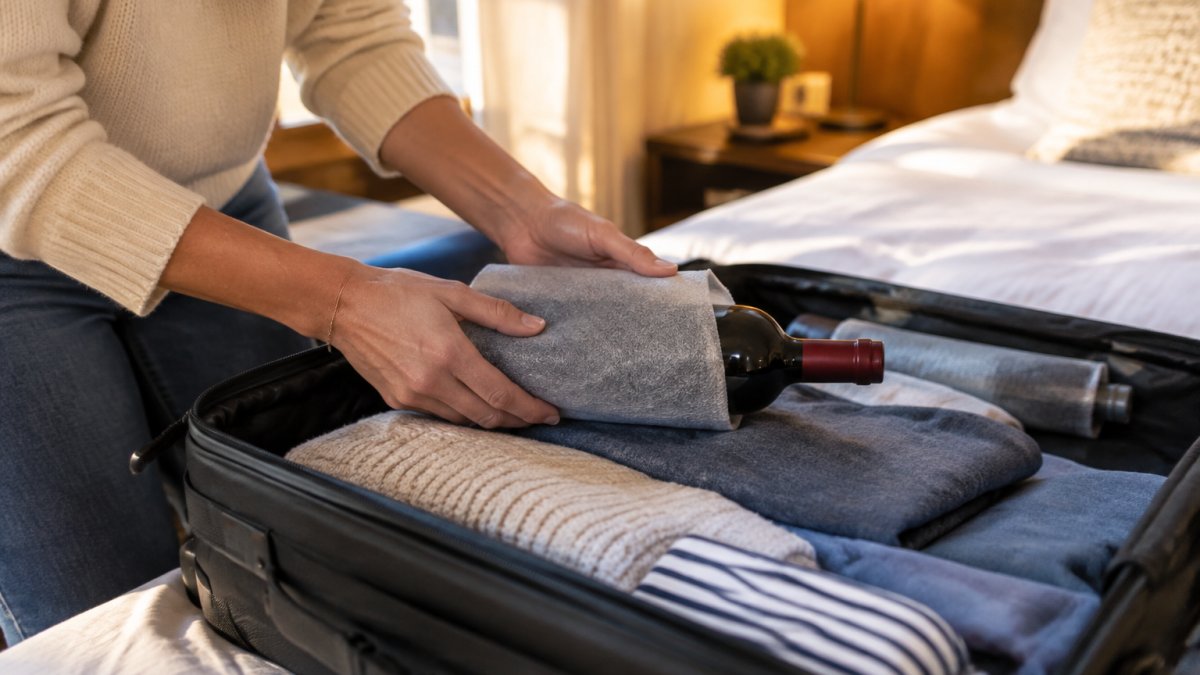
Start with a good layer of clothing above and below each bottle. Former flight attendant Carrie Ann Karstunen told Condé Nast Traveler that this is the single best defence against breakage.
Follow these steps:
Even an intact bottle can leak through a damaged seal. Double-bag every bottle in a leak-proof bag, then pack a folded towel around the cluster to absorb any spill.
For a full walkthrough of the wrapping method, see our guide on how to pack wine for a flight home safely.
A wine bottle travel bag is a padded, reusable carrier built specifically for glass bottles, and it outperforms bubble wrap on protection and convenience. Inflatable wine bags, padded sleeves and moulded foam inserts are seeing growing adoption among air travellers, according to Wine Shipping Boxes.
The mechanism matters more than the marketing. Bubble wrap protects against a single impact by trapping air, but it compresses under sustained load and shifts inside a suitcase as clothes settle. Once it compresses, the bottle is effectively bare against the next impact. A padded sleeve or moulded foam insert holds its shape, keeps the bottle centred, and dampens the repeated vibration of a cargo hold or a long drive. Inflatable bags add a second layer: the air chamber absorbs impact and, if the bottle breaks, the bag contains the liquid rather than letting it soak your clothes.
Here is how the two compare:
| Feature | Wine bottle travel bag | Bubble wrap |
|---|---|---|
| Reusable | Yes, trip after trip | No, single use |
| Vibration dampening | Built-in padding holds shape | Compresses and shifts |
| Leak containment | Often includes a liner | Needs extra bagging |
| Packing time | Seconds per bottle | Several minutes |
| Cost over time | One purchase | Repeated buying |
The DIY-versus-professional trade-off is real. Bubble wrap and a sealable bag cost almost nothing and work for a one-off trip where the bottle is low-value. But if you travel with wine more than once a year, or the bottle is worth more than the cost of a sleeve, the dedicated gear pays for itself in the first trip. A padded sleeve typically costs less than a single mid-range bottle of wine, and it survives dozens of trips.
Watch out: not all padded sleeves are equal. A neoprene sleeve protects against scuffs and light knocks but does nothing for a drop onto a hard floor. For checked luggage, look for a rigid or semi-rigid shell, or a moulded foam insert, rather than a soft fabric sleeve. If you are packing multiple bottles, a purpose-built two- or six-bottle carrier with dividers stops glass touching glass, which is the most common cause of breakage in a well-packed bag.
Packing wine for a road trip is mostly about heat, not impact. Never store wine in the boot. Trunk temperatures swing wildly, and wine should ideally sit between 12.7°C and 18.3°C, according to New Haven's wine storage guidance.
Keep bottles in the passenger area, out of direct sun, and pack them in a padded sleeve or box wedged so it cannot roll. Vibration is the second enemy: a towel-lined crate or foam insert stops bottles rattling against each other over long drives.
International wine transport brings rules you cannot skip, and the detail matters more than the headline. You must declare alcohol on your incoming passenger card. If you fail to declare, you risk infringement notices, fines or having the wine seized, and 'I didn't know' is not a defence.
The allowance is the number to know before you pack. Adult travellers can bring in a limited amount of alcohol duty-free. Check current allowances before you fly. Anything above that is subject to duty, and the rate depends on the alcohol content and the volume. Check the current limits and rates with the Australian Border Force before you fly, because allowances and duty rates are adjusted periodically.
Wine can also attract additional taxes and duties on arrival, so pack within the allowance and consider shipping larger volumes separately.
Watch out: the duty-free allowance is per person, not per bag. A couple travelling together can pool their allowance, but a family with children cannot count the children's allowance, only adults 18 and over qualify.
Insurance deserves the same attention. Travel insurance policies often limit cover for fragile items, so check the wording before you fly. Photograph each bottle before you fly, keep receipts, and check the policy wording for the fragile-items sub-limit and the alcohol exclusion before you rely on it. If a bottle breaks and damages other items in the bag, the claim may fall under the fragile-items cap rather than the general baggage limit, which is often much lower. If you are shipping rather than carrying, the courier's own liability cover is usually limited by weight or value, so declare the true value and consider separate transit insurance for high-value bottles.
The last leg is where careful packing often unravels. A rushed taxi with a boot full of suitcases is how wine bottles meet their end.
Book a fixed-price transfer with Sky Transfers, which includes meet and greet and real-time flight tracking, and which can accommodate groups of any size.
If you are weighing up your options, this comparison of Gold Coast Airport transport options with luggage covers shuttles, taxis and private transfers. Knowing realistic travel times from the airport also helps you plan a calm, unhurried journey.
Wrap each bottle in a padded sleeve or two layers of bubble wrap, then seal it inside a leak-proof bag. Place bottles in the centre of the suitcase, upright, surrounded by clothing above, below and on all sides. Start with a good layer of clothing above and below the bottle. Keep the heaviest bottles closest to the suitcase wheels so the load stays stable when the bag is stood upright.
Yes. Wine travels in checked luggage, not carry-on, because liquid limits apply in the cabin. Baggage limits vary by airline, so weigh your suitcase before the airport and spread bottles across bags if needed. Rough handling is a bigger risk than pressure changes, so padding matters. Check your airline's fragile item policy before you fly.
Seal every bottle inside a leak-proof bag or a heavy-duty sealable plastic bag before it goes into the suitcase. Close the seal fully and squeeze out excess air so any seepage stays contained rather than soaking your clothes. Keep bottles upright during packing and transit where possible. If a bottle does leak, the bag protects the rest of your luggage and makes the spill easy to remove at your destination.
For anyone carrying more than one bottle, yes. Padded wine carriers, including inflatable bags, padded sleeves and moulded foam inserts, are a practical option for protecting several bottles at once. For a single bottle wrapped in clothing, a travel bag is optional; for a case of wine or repeated trips, it pays for itself by preventing one broken bottle from ruining a suitcase full of clothes.
Carrying wine home should end with a full bottle on the table, not a stained suitcase. Sky Transfers offers fixed-price, upfront pricing with no surge fees, 24/7 availability and real-time flight tracking, so your fragile luggage travels in steady hands. Get started with Sky Transfers and arrive with every bottle intact.