
7 Steps to Plan Winery Tour Stops for a Group
Plan winery tour stops for a group the smart way: work back from finish time, anchor lunch, and build in tastings and backups.
Get a group quotePlan winery tour stops for a group the smart way: work back from finish time, anchor lunch, and build in tastings and backups.
Get a group quote← All articles · Published 30 October 2026 · 12 min read
Last Updated: October 30, 2026
Quick Summary
Plan winery tour stops for a group by working backwards from the finish time, then choosing three or four wineries with lunch in the middle. Allow 45 to 60 minutes per tasting plus travel and reset buffers. Book lunch as the fixed anchor, confirm group capacity in writing, and keep a backup stop for each region.
Planning winery tour stops for a group is harder than it looks, and most day trips fall apart at the second or third stop. The day works when the stops are chosen and timed well, and it struggles when they are not. This guide walks through a practical method for planning those stops.
The advice below focuses on practical planning steps.
The stops set the pace of the whole day. Too few and the group gets bored. Too many and people are rushed, tipsy by mid-afternoon, and running late for the next booking.
A common mistake is picking the wineries first and working out the timing later. If the day is also a celebration, see how Christmas party transfer planning fits into the checklist and schedule.
For most groups, three to four wineries in a full day is a comfortable target. Two stops suit a half-day tour, and five or more usually leaves the last stop feeling like a chore.
Consider these factors when setting the number:
We recommend keeping the day to three main stops plus lunch, then adding a fourth only if the group clearly wants it.
Not every winery works for every group. A winery that suits wine enthusiasts may bore a group of friends who want a relaxed afternoon, and the reverse is also true.
Before you shortlist venues, ask the group:
Compare the options with these points in mind:
Pros of a mixed-region route:
Cons of a mixed-region route:
Pros of a single-region route:
Cons of a single-region route:
Check access before you lock in a venue. Some wineries have steep driveways, gravel paths, or stairs to the tasting room. Ask each group member in advance about mobility needs, and confirm that the venue and vehicle can handle them.
Write the itinerary as a timed list, not a loose plan. The method below is the one we use when a group wants a schedule that survives contact with reality, because the most common failure is not a bad winery, it is a schedule with no room to breathe.
Work backwards from the finish time, not forwards from the pickup. For each stop, allocate:
A workable full-day template for a group of eight to twelve looks like this:
09:30 Pickup and depart 10:15 Arrive Winery 1, seated tasting (60 min) + 15 min reset 11:30 Depart Winery 1 11:55 Arrive Winery 2, standing tasting (45 min) + 15 min reset 12:55 Depart Winery 2 13:15 Arrive lunch venue, sit-down lunch (90 min) 14:45 Depart lunch 15:10 Arrive Winery 3, seated tasting (60 min) + 15 min reset 16:25 Depart Winery 3 17:00 Drop-off
That is three wineries plus lunch in a seven-and-a-half-hour window. If the group wants a fourth stop, you either start 45 minutes earlier or drop the seated format at one venue, you cannot simply add a stop without removing time from somewhere else.
Groups run late. Build the schedule so a 20-minute overrun at stop one does not cascade into a missed lunch booking. Two rules help:
Put the lightest, most structured tasting first, when the group is fresh and attentive. Save the relaxed, longer stop for after lunch. Avoid scheduling a fortified or spirits tasting as the final stop if the group still has a drive ahead, the last stop should be the easiest to leave.
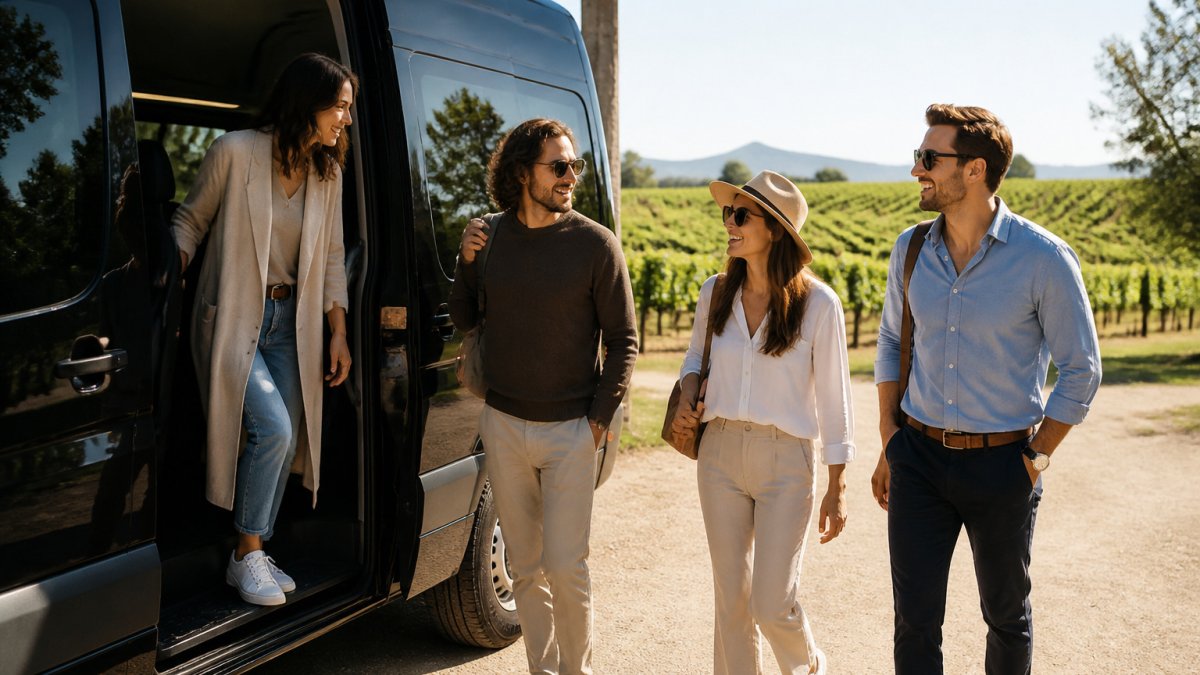
Have a backup stop for every booked one. Wineries close for private events, harvest logistics, or staff shortages with little notice. Keep one nearby cellar door or a scenic lookout in reserve for each region, and confirm the morning of the tour that each venue is expecting you. If a stop falls through, the backup keeps the day moving instead of leaving the group sitting in a car park.
Surprises usually come from bookings, not from the wineries themselves. The fix is to treat every reservation as a small contract: confirm what is included, who is responsible, and what happens if plans change.
A cellar door that welcomes walk-in couples may cap group tastings at eight or require a private room for twelve. When you enquire, state the exact number attending and ask:
Get the answers in writing, email is fine, and keep them in one place. A single point of contact for the group is essential: one person confirms numbers, collects dietary requirements, pays deposits, and makes the call on the day. Groups that book through three different people are the ones that arrive with the wrong headcount.
The vehicle quote is rarely the whole cost. Build a per-person budget that includes:
Quote every figure in Australian dollars and confirm whether prices include GST. Ask each venue whether the group menu price is per head or per platter, and whether beverages are included or charged on consumption.
When you collect dietary requirements, collect mobility needs at the same time. Ask whether anyone uses a walking aid, needs step-free access to the tasting room, or cannot manage a gravel path or a steep driveway. Pass both sets of information to every venue in one email so nothing is lost between stops.
A simple table, venue, contact name, phone, arrival time, headcount, deposit paid, cancellation deadline, dietary notes, is enough. Share it with the driver and with the group's single point of contact. On the morning of the tour, call each venue to reconfirm.
Bookings cause most day-of problems, so this table lists the key confirmations and deadlines to lock in before the tour.
| Item | Value | Note |
|---|---|---|
| Tasting fees | Per person, sometimes waived | Ask each venue for current policy |
| Lunch final numbers | 48 to 72 hours out | Confirm headcount and dietary needs |
| Deposit | Often non-refundable inside 7 days | Check refund terms in writing |
| Currency and tax | Australian dollars | Confirm whether prices include GST |
| Gratuities | Optional in Australia | Decide in advance whether pooled |
| Reconfirmation call | Morning of the tour | Prevents most day-of problems |
Use this checklist before you confirm the day:
Here is a simple schedule template to adapt:
10:00 Pickup and depart 10:45 Arrive at Winery 1, tasting (60 minutes) 12:00 Travel to lunch venue (20 minutes) 12:20 Lunch (90 minutes) 14:00 Travel to Winery 2 (25 minutes) 14:25 Tasting at Winery 2 (45 minutes) 15:30 Return and drop-off
Adjust the times to the group's actual schedule, and keep the buffers.
Transport is the piece that holds the whole day together. Learn more about our fleet, chauffeurs and experience on the Gold Coast.
To check the right vehicle for your group size and get a fixed-price quote, visit the Sky Transfers website or contact our team directly. You can compare the Christmas party transport vehicle options and fixed pricing for the Gold Coast and Brisbane.
Most groups enjoy three to four winery stops in a full day, with a longer lunch stop included. Allowing around 60 to 90 minutes per stop covers a tasting, a short walk and time to talk. Fewer stops also leave room for travel delays, late arrivals and members of the group who want to rest or change their plans. Tasting fees, which vary by venue and are set by each winery, can add up quickly, so check them before you commit to a full schedule.
A typical stop runs 60 to 90 minutes, depending on whether the group takes a guided tasting, a tour of the vineyard or a seated food pairing. Groups with a mix of wine enthusiasts and casual drinkers often benefit from keeping stops shorter and varied. Build in a buffer of 10 to 15 minutes between stops for parking, toilet breaks and getting everyone back on board. Confirm timings with each venue when you book, as group sizes can change the pace of a tasting.
Yes. Booking ahead confirms group capacity, tasting times and any lunch arrangements, and avoids being turned away at busy cellar doors. Ask each venue about cancellation terms and whether they require a deposit, since policies vary. Share dietary needs and accessibility requirements at the time of booking. Keep a single list of confirmed bookings so your driver and tour leader can work from the same schedule on the day.
Aim for stops that are no more than 20 to 30 minutes apart by road, depending on traffic and the route. Clustering wineries in the same sub-region reduces driving time and keeps the day relaxed. Check the route with your transport provider before finalising the order, as some roads are slower at peak times or during events. Leaving a gap in the schedule after lunch helps manage any delays from earlier stops.