
Best Wine Suitcase Inserts for Frequent Travellers
Compare wine suitcase inserts for frequent travellers by bottle capacity, protection, durability and fit for everyday luggage.
Book an airport transferCompare wine suitcase inserts for frequent travellers by bottle capacity, protection, durability and fit for everyday luggage.
Book an airport transfer← All articles · Published 16 November 2026 · 5 min read
Last Updated: November 15, 2026
Quick Summary
The best wine suitcase inserts hold each bottle upright, keep glass from knocking together, and fit the bottle size you carry most. For frequent travellers, choose by bottle count, snug foam cavities that match standard 750 mL bottles, and a fit that still lets your case close without strain.
Packing wine for a flight home is less about luck and more about choosing the right wine suitcase inserts. A good insert holds each bottle upright, keeps glass from knocking together, and stops a fall from turning a case into a mess. For frequent travellers, the choice comes down to how the insert fits your suitcase, how many bottles you carry, and how well it protects them over repeated trips.
Most inserts are sold by bottle count, usually six, eight, ten or twelve bottles. Check the bottle dimensions before you buy, because a standard 750 mL bottle needs a different cavity from a slim or squat bottle. A foam insert with snug cavities protects better than a loose one that lets bottles rattle. Pick the insert that fits your most common bottle, then confirm it still closes your case without strain.
The main insert options differ mainly in bottle count and how snugly the cavities fit.
| Feature | Detail | Why it matters |
|---|---|---|
| Common bottle counts | Six, eight, ten or twelve | Match the count to how much wine you carry |
| Standard bottle size | 750 mL | Check cavity dimensions against this size |
| Snug foam cavities | Protect better than loose ones | Loose fit lets bottles rattle |
| Fit check | Case still closes without strain | Confirms the insert suits your suitcase |
Wrap each bottle in a jumper or bubble wrap before it goes into its cavity. Place bottles upright, never on their sides, and fill any gaps with clothing so nothing shifts. Keep the heaviest case items low and centred. A common mistake is packing bottles too loosely, which lets them knock together during handling.
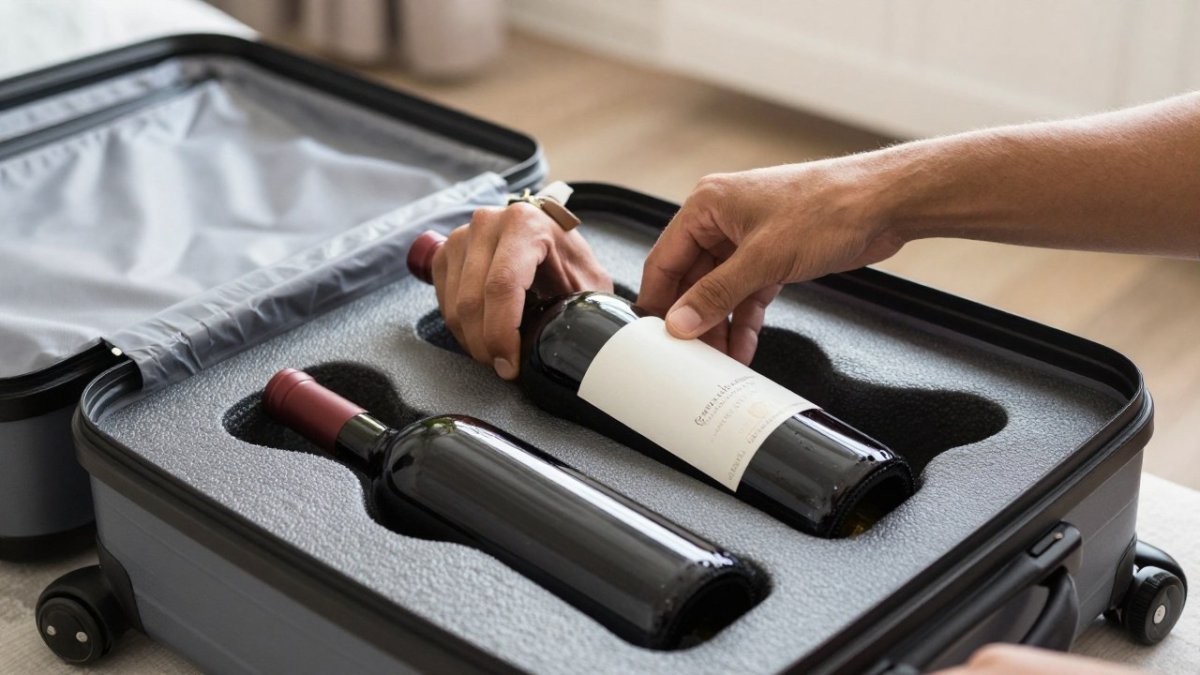
A dedicated wine travel bag suits people who fly with wine often and want padding built in. An insert suits travellers who already own a hard-shell suitcase and want to avoid buying new luggage. An insert can suit occasional trips, while a dedicated bag may suit regular, high-value carry.
Use a rigid or moulded insert that holds each bottle upright and separated, then wrap each bottle in clothing or bubble wrap before placing it inside. Keep bottles away from the suitcase edges, where impacts are strongest, and fill any gaps so nothing shifts during handling. Packing the bottles in the centre of the case, surrounded by soft items such as jumpers, reduces the chance of breakage. Check the insert's bottle dimensions against a standard 750 mL bottle before you buy, since a loose fit is the most common cause of damage on the baggage belt.
Inserts suit travellers who want to keep one regular suitcase for everything, while a dedicated wine case gives more built-in protection and usually a more durable shell. An insert is cheaper and can be removed when you do not need it, which helps if you travel with wine only occasionally. A dedicated case works better for frequent travellers carrying several bottles on every trip. Pricing and capacity vary by product, so check current prices directly with the seller before deciding.
Many wine bottle travel bags and inserts are sized for standard hard-shell or soft-shell suitcases, but fit depends on the case's internal dimensions and the bottle's shape. Measure the internal length, width and depth of your suitcase in centimetres, then compare them with the product's listed dimensions. Bottles with wide shoulders or non-standard shapes may not sit securely in every insert, so confirm bottle compatibility before you travel.