
12 Questions to Ask on a Winery Tour That Locals Never Think Of
A winery tour is better when you know what to ask. Get 12 sharp questions for tastings, beginners and etiquette, plus how to plan a smooth day out.
Get a group quoteA winery tour is better when you know what to ask. Get 12 sharp questions for tastings, beginners and etiquette, plus how to plan a smooth day out.
Get a group quote← All articles · Published 24 November 2026 · 6 min read
Last Updated: November 23, 2026
Quick Summary
Ask questions on a winery tour that connect what you taste to how it was made, starting with how the growing season treated the vines and whether the winemaker picked early or late. Then move to the making, asking about oak or stainless steel and single vineyard or blended wines.
The best questions connect what you taste to how it was made, the growing season, the winemaking choices and the people behind the label.
Start with the vintage: how the growing season treated the vines, and whether the winemaker picked early or late. Then move to the making: oak or stainless steel, single vineyard or blended.
Arrive on time, spit if you need to, and never treat the tasting room as a bar.
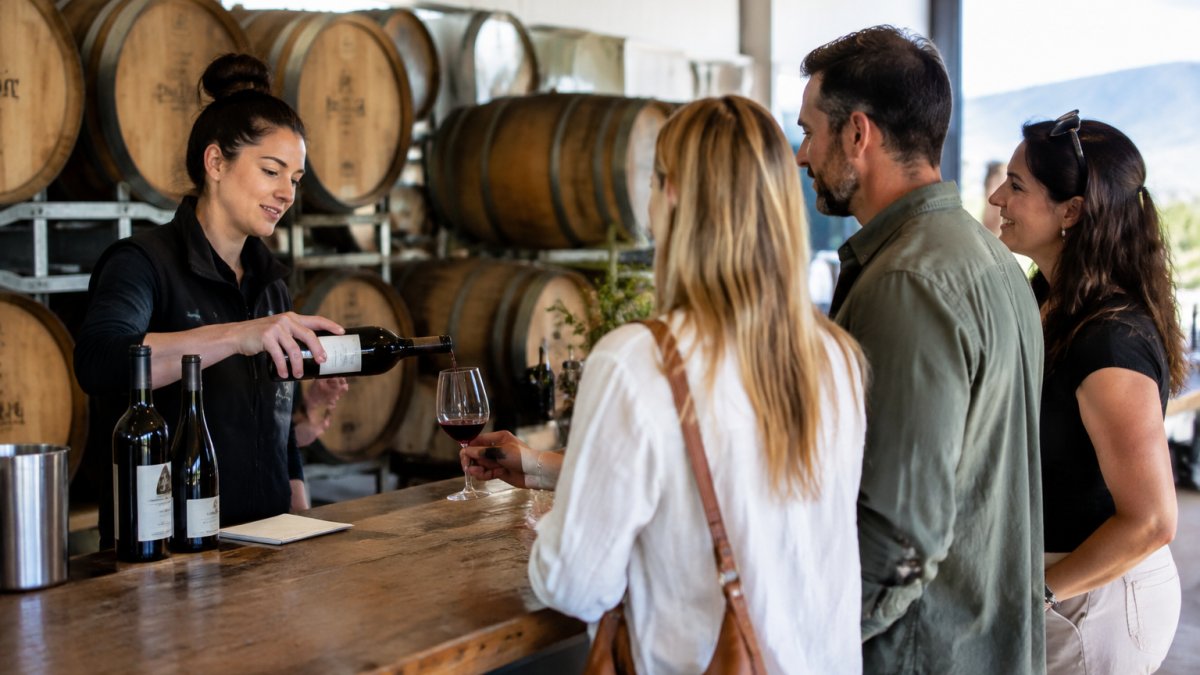
Confirm your pickup time with your transport provider before you book, and build a buffer between stops.
Ask about the winemaking process itself and you will get the most generous answers. Winemakers love explaining fermentation, barrel aging and blending far more than reciting tasting notes.
Try these: which grape varieties do you grow, and which do you buy in? How long did this wine spend in oak, and what size barrels? Is this a tasting-room exclusive, or does it go to distribution?
If you are organising transport between tastings, compare party bus and minibus options before you lock in the day.
Here are the winemaking questions the article suggests, paired with what each one gets you.
| Question | What it reveals |
|---|---|
| Which grape varieties do you grow, and which do you buy in? | Estate versus purchased fruit |
| How long did this wine spend in oak, and what size barrels? | Barrel aging and blending choices |
| Is this a tasting-room exclusive, or does it go to distribution? | Where the wine is sold |
| Which wine here is your best seller, and why? | The crowd favourite and its appeal |
| What does "terroir" mean for your vineyard specifically? | What the site gives the wine |
| How did the growing season treat the vines? | Vintage conditions and picking timing |
| How did the estate begin, and who picks the grapes? | The people and stories behind the label |
Beginners get the best value from simple, direct questions. Ask what to expect on a winery tour before you arrive, then ask staff to explain anything on the tasting sheet you do not recognise.
Good starters: what does "terroir" mean for your vineyard specifically? Which wine here is your best seller, and why?
For a relaxed day out, check vineyard picnic transport options so pickup and timing are sorted before you go.
Ask how the estate began and who does the grape picking, and you will hear the stories that make a regional wine memorable. Harvest timing, vine age and vineyard size all shape what ends up in your glass. Ask about sustainability too, many growers now talk openly about soil health, water use and climate effects on vintage variation.
Book your transport before you book the tastings. Fixed pricing, confirmed bookings and real-time flight tracking remove much of the uncertainty about getting home.
If you are planning the stops themselves, our guide on planning winery tour stops for a group walks through timing and backups.
The day works best when the logistics disappear into the background. Sky Transfers runs fixed-price chauffeur transfers with no surge fees, 24/7 availability, meet and greet, real-time flight tracking and free cancellation up to 24 hours, so your group arrives relaxed and leaves on schedule. Get started with Sky Transfers and let someone else handle the driving.
Start with the basics and let the guide lead. Ask which grape varieties grow best on the estate, how the growing season went, and which wine they would open for a friend who usually drinks something else. Beginners get the most from questions like 'what should I notice in this glass?' and 'how long was this aged?'. Guides enjoy curious visitors far more than silent ones, so there is no need to pretend you already know the answers.
Skip the pressure of finding the 'right' word. Ask the winemaker what aromas and flavours they expect from that bottle, then say what you actually taste. Questions like 'is this the acidity I'm feeling?' or 'what gives it that finish?' show engagement rather than ignorance. Tasting notes are a shared vocabulary, not a test, and most cellar door staff will happily explain acidity, tannins and body in plain terms.
Book ahead, arrive on time, and treat the tasting room as someone's workplace. Spit if you are driving, keep group noise down, and ask before taking photos of staff or production areas. Dietary needs and non-drinkers are worth flagging when you book so the venue can prepare. Above all, arrange a designated driver or a pre-booked transfer so nobody has to cut the day short or make a risky call on the road.